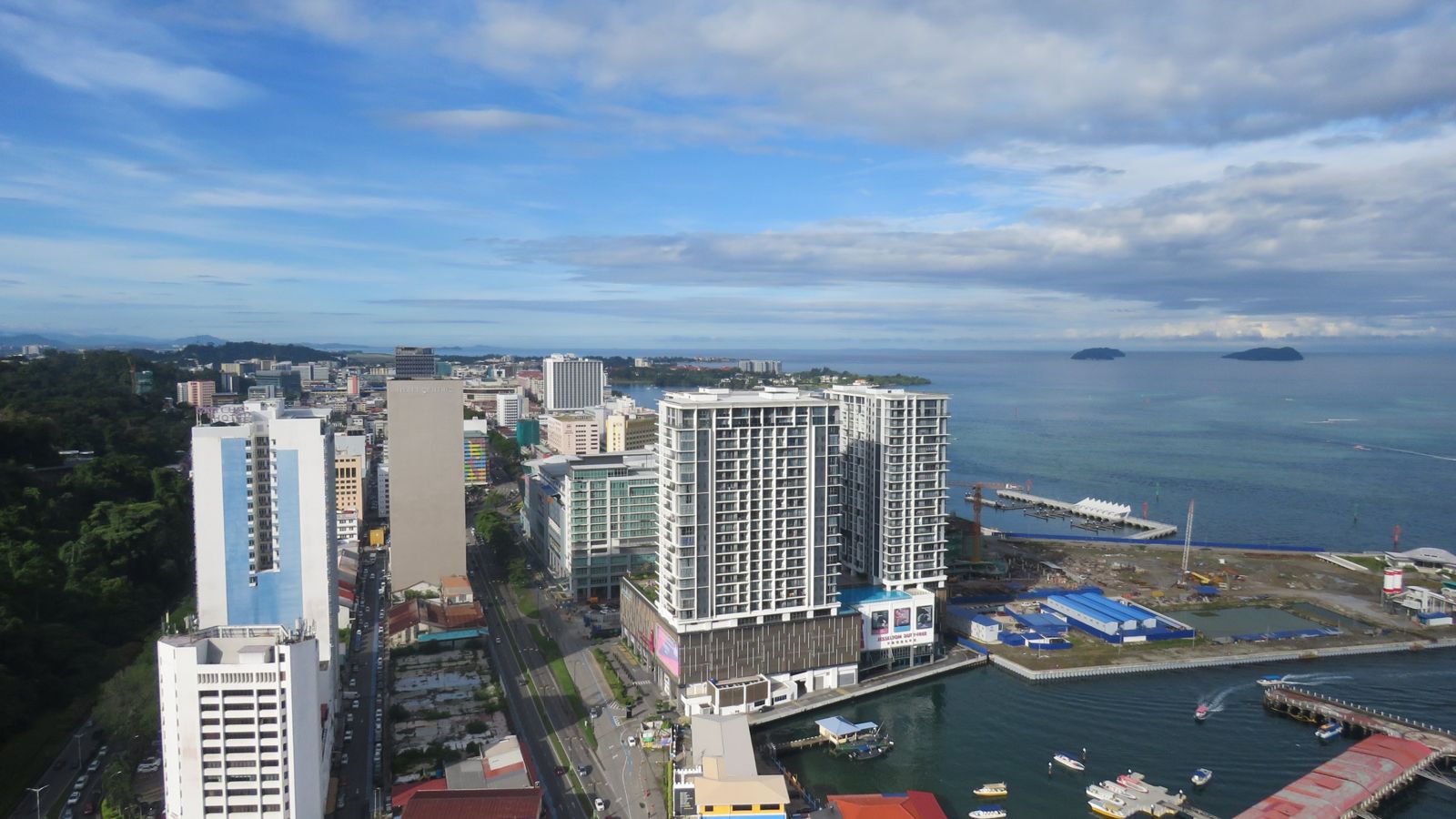
Sabah, Malaysian Borneo · Travel guide
Kota Kinabalu,
sea level to 4,095 m
Coral islands 15 minutes offshore, a seafood city on the South China Sea, and the highest mountain in Malaysia two hours inland. This guide covers how to get here, what to do, what it costs and how to fit it into three, five or seven days.
Elevation profile of a Kota Kinabalu trip. Vertical scale is true; horizontal distance is compressed (the summit is about 90 km by road from the city).
- Airport
- BKI, 8 km from centre
- Time zone
- UTC+8
- Currency
- Ringgit (RM)
- Climate
- 24–32°C all year
- Languages
- Malay, English, Chinese
- Power
- Type G, 240 V
Before you go
Plan your trip
Kota Kinabalu, known locally as KK, is the capital of Sabah. Entry is simple for most visitors, but Sabah runs its own immigration checks and the mountain needs booking months ahead.
Entry and documents
- Passport valid for at least six months.
- Malaysia Digital Arrival Card (MDAC), submitted online within three days before arrival. It is free on the Immigration Department site.
- Visa: many nationalities enter visa-free for 30 to 90 days. Check the rule for your passport before booking.
- Sabah immigration: Sabah controls its own border. Arriving from Peninsular Malaysia or Sarawak, foreigners show their passport again and Malaysians show MyKad.
When to come
- February to April is the driest stretch and the most reliable for islands and summit views.
- May to September is warm with afternoon showers. Seas are usually calm in the morning.
- October to January is the wettest period. Boats and climbs still run, but cancellations are more likely.
- 30–31 May: Kaamatan, the Kadazandusun harvest festival, is the cultural high point of the year.
Book ahead
- Mount Kinabalu: 163 climbers a day. Reserve three to six months ahead, longer for March to August.
- Hotels for Chinese New Year, Kaamatan, school holidays and the December peak.
- Sunset dinner and firefly cruises a few days ahead in peak season.
- Island boats need no reservation. Buy on the day at the terminal.
Money
Cards work in hotels, malls and most restaurants. Carry cash for markets, small stalls and the islands. ATMs are common in the centre; there are none on the islands.
Tourism tax
Foreign guests pay RM10 per room per night at registered accommodation, collected by the hotel. Malaysians are exempt.
Connectivity
Buy a prepaid SIM or eSIM at the airport arrivals hall. 4G and 5G cover the city; signal is patchy on the mountain and outer islands.
How long
Three days covers the city and islands. Five adds the highlands. Seven allows a summit climb or the far north.
Month by month
| Month | Weather | What is on | Good for |
|---|---|---|---|
| January | Mixed. The north-east monsoon is easing; breezy with passing rain. | New Year; Chinese New Year in January or February, with lion dances on Gaya Street. | City, food, highlands |
| February | Dry and sunny. | Chinese New Year if it falls late. Hotels fill for the holiday week. | Islands, summit climbs |
| March | Driest month. Calm seas and clear mornings. | School holidays for a week mid-month. In 2027, Hari Raya Aidilfitri is expected around 10 March, with evening Ramadan bazaars in the weeks before. | Islands, diving, climbing |
| April | Dry and hot. Hazy on some days. | Good Friday and Easter fall in March or April. Otherwise a quiet month between holidays. | Islands, climbing |
| May | Hot with afternoon showers starting. | Kaamatan harvest festival all month, closing on 30 and 31 May at the KDCA hall in Penampang. | Culture, food |
| June | Sunny mornings, thunderstorms late in the day. | Dragon boat racing at Likas Bay. School holidays. | Islands in the morning, rafting |
| July | Warm, showery afternoons. | Peak season for overseas visitors. Fruit season is under way. | Climbing, rafting, fruit |
| August | Similar to July. Occasional windy spells. | National Day on 31 August. | Climbing, day trips |
| September | Wetter. Rain most afternoons. | Malaysia Day on 16 September, marked with parades in the city. | City, rafting, lower prices |
| October | Wettest stretch begins. Heavy downpours. | The Mount Kinabalu Climbathon mountain race is usually held around this time. | Food, museums, hot springs |
| November | Wet. Some rough-sea days. | Quiet month with the lowest hotel rates. | City breaks, spas |
| December | Wet but festive. Rain comes in bursts. | Christmas lights and carolling, year-end school holidays, New Year countdown at the waterfront. | Families, food, shopping |
Weather is a pattern, not a promise. Festival and holiday dates that follow the lunar or Islamic calendar shift every year; check the dates for your year.
Events and holidays in 2027
| Date | Event | Type |
|---|---|---|
| 1 Jan (Fri) | New Year's Day | Public holiday |
| 17 Jan (Sun) | Kota Kinabalu Marathon, Likas Sports Complex | Event |
| 31 Jan (Sun) | Borneo Half Marathon, from Padang Merdeka | Event |
| 2 Feb (Tue) | Kota Kinabalu City Day, the anniversary of city status | Event |
| 6–7 Feb (Sat–Sun) | Chinese New Year; replacement holiday on Monday 8 February | Public holiday |
| Feb to early Mar | Ramadan fasting month, with evening food bazaars. Start date depends on moon sighting. | Event |
| 10–11 Mar (Wed–Thu)* | Hari Raya Aidilfitri | Public holiday |
| 26 Mar (Fri) | Good Friday | Public holiday |
| 30 Mar (Tue) | Birthday of the Governor of Sabah | Public holiday |
| 12 Apr (Mon) | Malaysia–ASEAN Kinabalu Climb, Mount Kinabalu | Event |
| 1 May (Sat) | Labour Day | Public holiday |
| All of May | Kaamatan harvest festival events in districts across Sabah | Event |
| 9 May (Sun) | Borneo International Marathon, Likas Stadium; first start at 2 am | Event |
| 17 May (Mon)* | Hari Raya Haji | Public holiday |
| 20 May (Thu) | Wesak Day | Public holiday |
| 30–31 May (Sun–Mon) | Kaamatan state-level finale at KDCA, Penampang; replacement holiday on Tuesday 1 June | Public holiday |
| 6 Jun (Sun) | Awal Muharram; replacement holiday on Tuesday 8 June | Public holiday |
| 7 Jun (Mon) | Birthday of the Yang di-Pertuan Agong | Public holiday |
| June, date not announced | Dragon boat races at Likas Bay | Event |
| 15 Aug (Sun) | Maulidur Rasul; replacement holiday on Monday 16 August | Public holiday |
| 31 Aug (Tue) | National Day | Public holiday |
| 16 Sep (Thu) | Malaysia Day | Public holiday |
| October, date not announced | Mount Kinabalu Climbathon | Event |
| 28 Oct (Thu)* | Deepavali | Public holiday |
| 24–25 Dec (Fri–Sat) | Christmas Eve and Christmas Day | Public holiday |
* Subject to moon sighting or official confirmation and may shift by a day. Replacement days follow Sabah's rule that a holiday on a Sunday moves to the next working day. Holiday dates are from the Sabah gazette as amended in September 2026; event dates are from the organisers' listings. Confirm before booking.
Background
Know the city
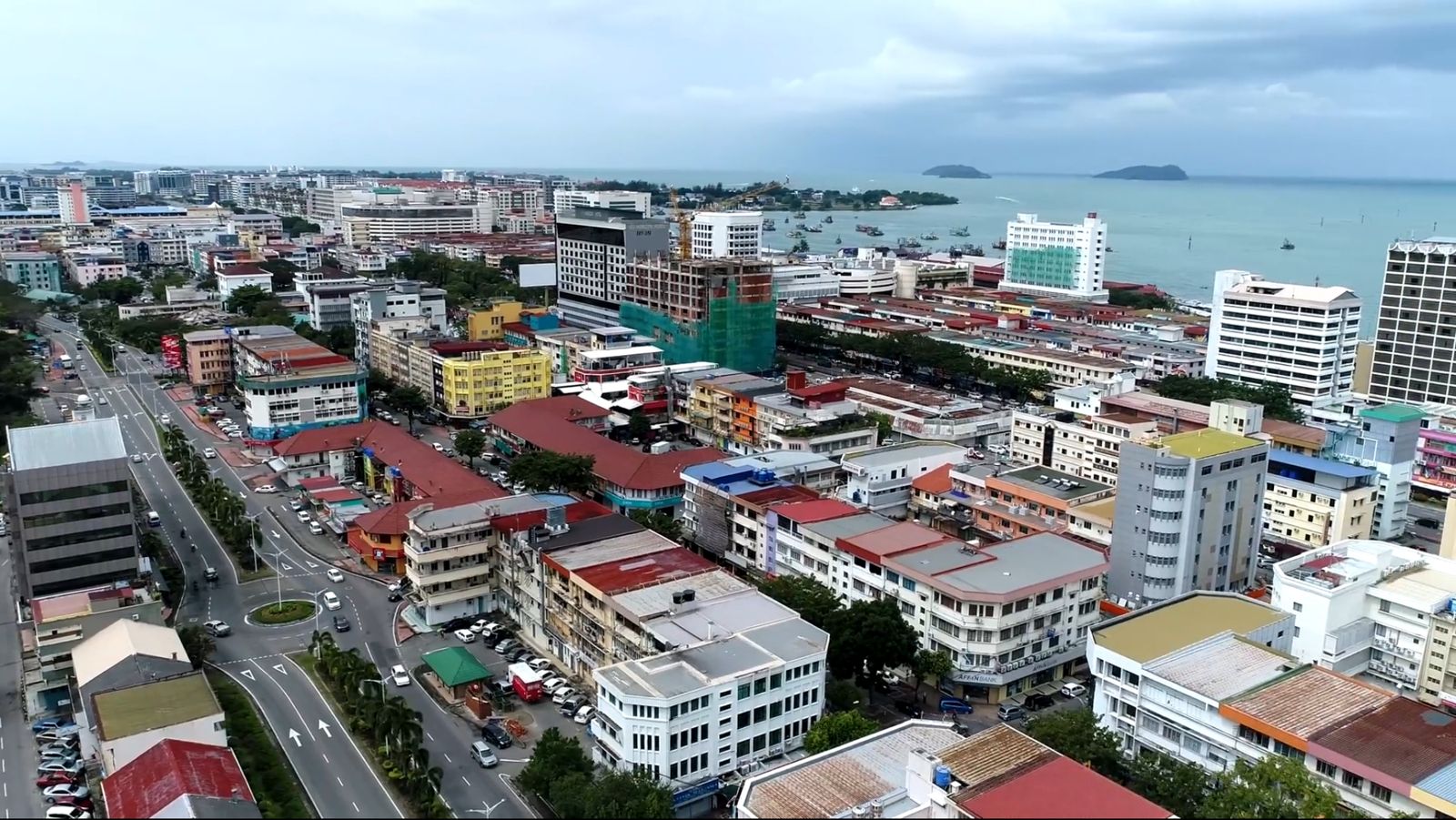
Kota Kinabalu is a young city on old trading ground. A little history explains why it looks the way it does and why the people are its best feature.
A short history
- Before 1899: the coast was home to Bajau fishing villages. The British North Borneo Company kept a trading post on Gaya Island until it was burned in 1897 during Mat Salleh's uprising.
- 1899: the company moved to the mainland and named the new town Jesselton after its vice-chairman, Sir Charles Jessel. Locals called the area Api-Api.
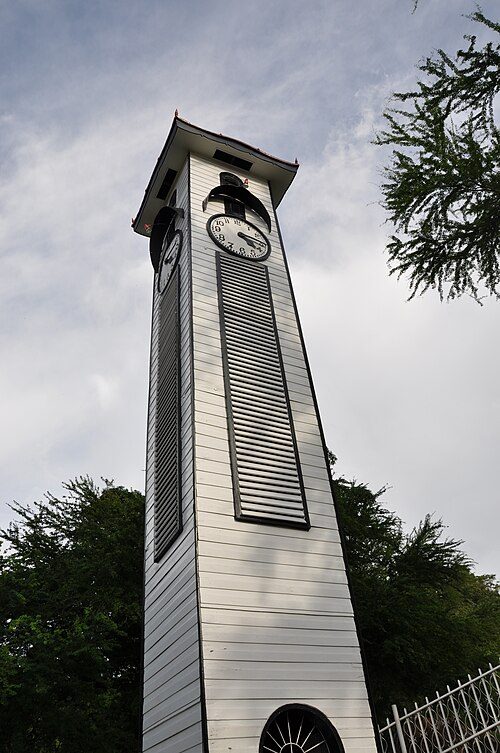
- 1945: wartime bombing flattened the town. Only three buildings survived, among them the Atkinson Clock Tower.
- 1946: Jesselton replaced Sandakan as capital of North Borneo.
- 1963: North Borneo became Sabah and joined in forming Malaysia on 16 September.
- 1967: the town was renamed Kota Kinabalu, after the mountain.
- 2000: Kota Kinabalu was granted city status on 2 February.
People and culture
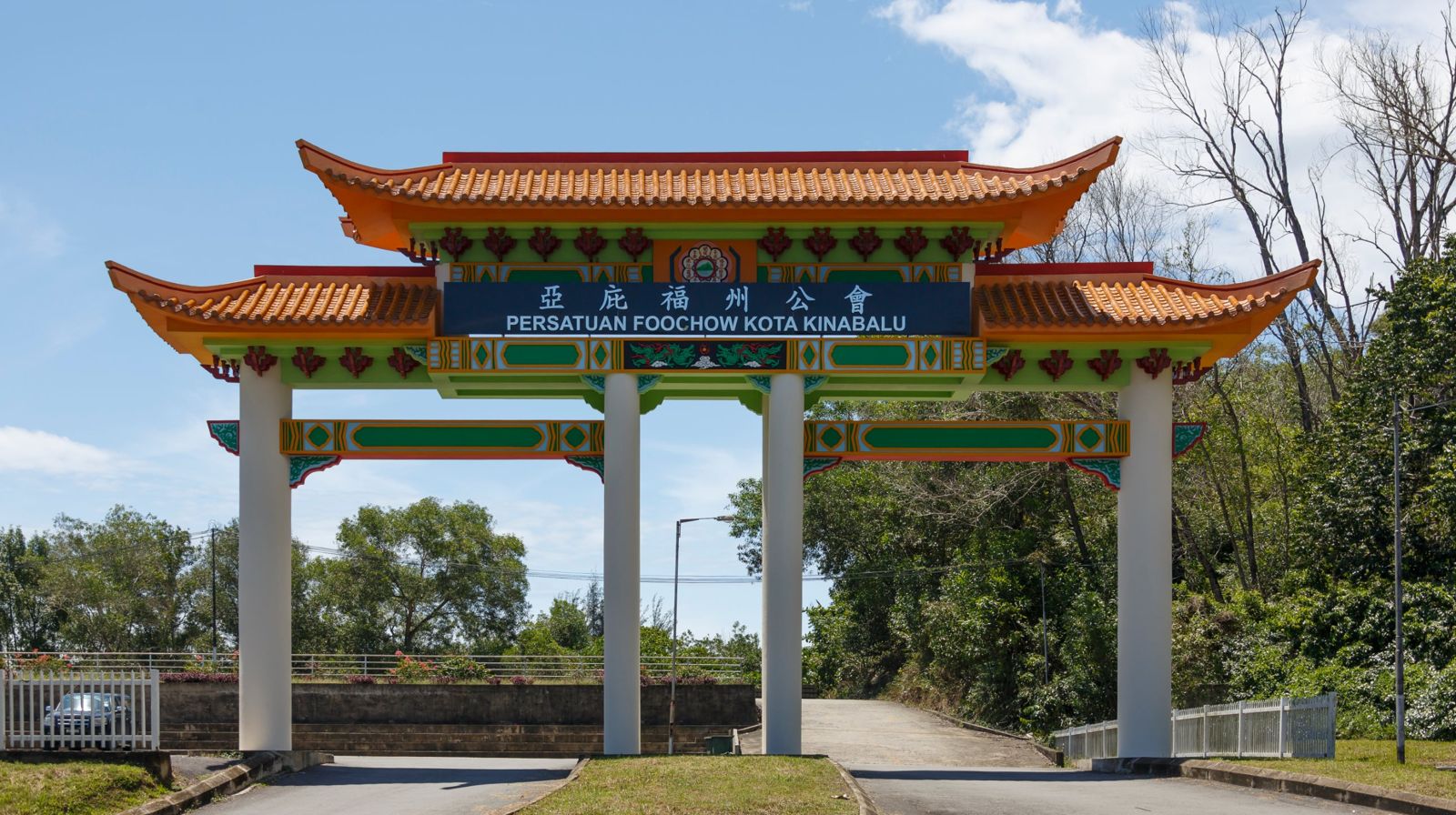
- Sabah has more than 30 ethnic groups. Around the city the largest are the Kadazandusun, the Bajau, the Chinese (mostly Hakka), the Murut and Malay and Bruneian communities.
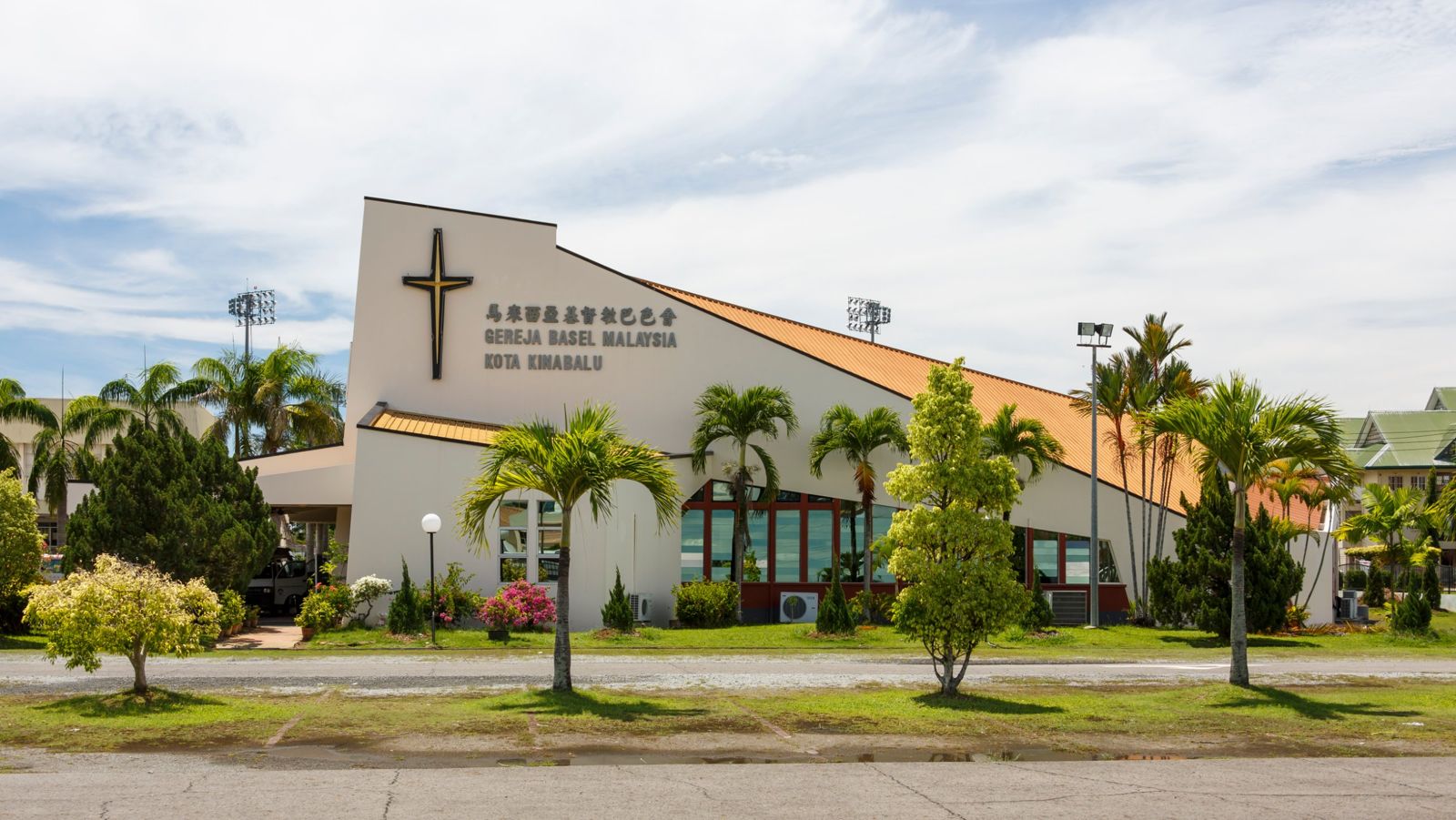
- Mosques, churches and Chinese temples stand in the same neighbourhoods, and families often celebrate one another's festivals.
- Kaamatan thanks the rice spirit for the harvest. Expect the sumazau dance, gong music, rice wine and the Unduk Ngadau pageant.
- A tamu is a weekly open market where villagers sell produce, snacks and crafts. Donggongon in Penampang holds one on Thursday and Friday mornings.
- Look for beadwork, woven rattan baskets and the bamboo sompoton mouth organ as locally made crafts.
- Malay is the common language, spoken with a distinct Sabahan accent. English is widely understood in the city.
Getting here and around
Arriving and moving about
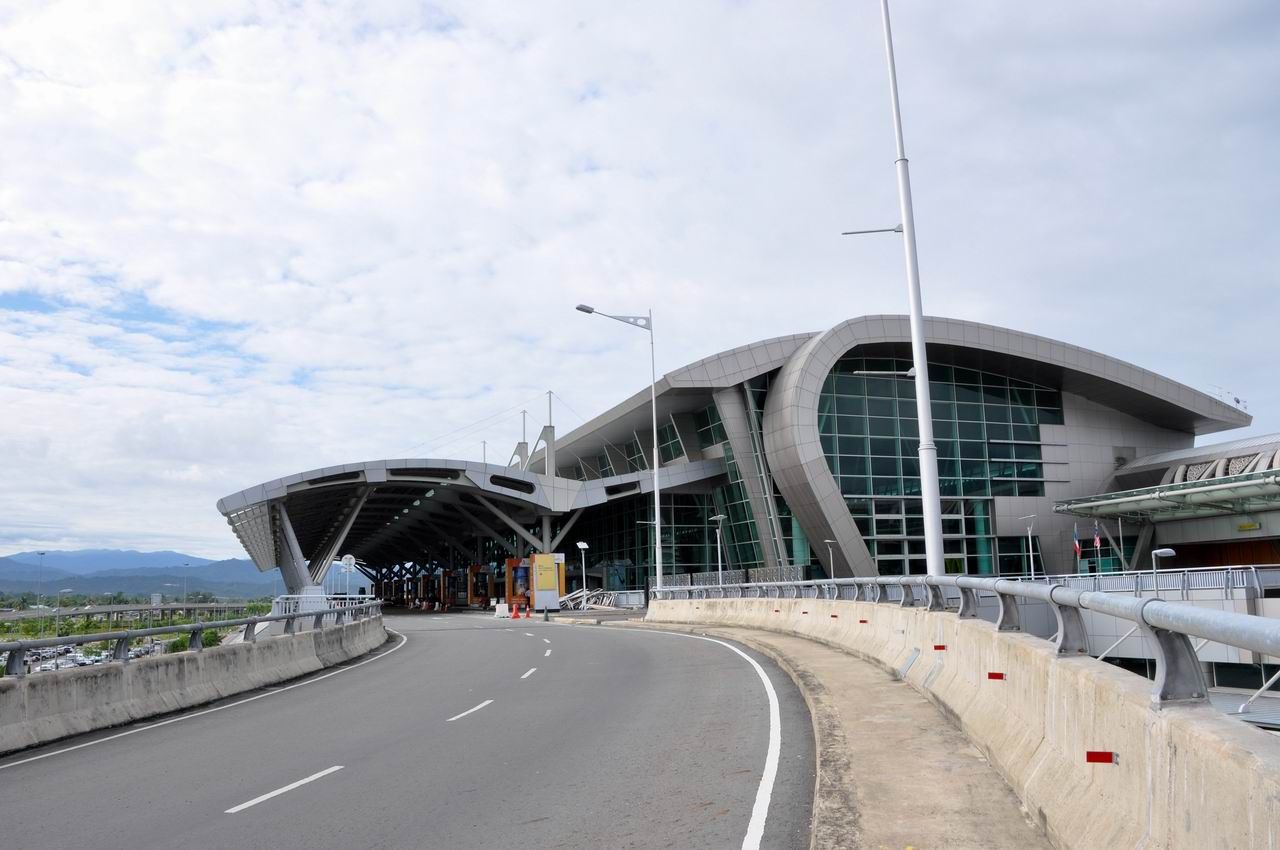
Kota Kinabalu International Airport (BKI) sits about 8 km south-west of the centre. There is no rail link and no metro. The city centre is walkable; everything else is by car.
| Airport to city | How it works | Typical fare | Time |
|---|---|---|---|
| Grab or other e-hailing | Book in the app after collecting bags. Pick-up is at the kerb outside arrivals. The usual choice for most visitors. | RM10–20 | 15–25 min |
| Airport taxi | Buy a fixed-fare coupon at the taxi counter in the arrivals hall and hand it to the driver. | RM30–45 | 15–25 min |
| Airport bus | Hourly from Level 1 arrivals to the city bus terminal, daytime only (about 8:00 to 20:30). | about RM5 | 25–30 min |
| Hotel or private transfer | Pre-booked with a named driver. Useful for late arrivals, families and resorts outside the centre. | RM50 and up | 15–40 min |
Flights
BKI is Malaysia's second-busiest airport. Kuala Lumpur is about 2 hours 30 minutes away with frequent daily flights. There are direct services from Singapore, and from cities in China, South Korea, Taiwan, Hong Kong, Brunei and the Philippines, plus domestic links to Sandakan, Tawau, Kuching and Miri. Routes change by season, so confirm with the airline.
Around the city
- On foot: Gaya Street, the waterfront and the markets are within a 20-minute walk of each other.
- Grab: most city rides cost RM5 to RM15. Cars are plentiful from early morning to midnight.
- Minibuses: they exist (RM1.50 to RM3 in cash, no fixed timetable) but are not recommended within the city. Walking or Grab is quicker and simpler for every city trip.
Out of the city
- Rental car: the easiest way to reach Kundasang and Kudat. Drive on the left. Mountain roads are winding and often foggy.
- Private driver: RM350 to RM500 a day for a car to the highlands and back.
- Buses and shared vans: to Kundasang and Ranau from Padang Merdeka; long-distance coaches from Inanam terminal.
Elevation5 m
In the city
KK was rebuilt after the Second World War, so it is a city of markets, waterfront and sunsets more than old streets. One full day covers the main sights.
City map
Schematic map of the city and the island park. Positions are approximate and the coastline is simplified; use a live map for navigation. Open the full map on OpenStreetMap.
Tanjung Aru Beach
The city's sunset beach, 10 minutes from the centre. Arrive by 5:30 pm, eat at the food stalls behind the sand and stay until the sky turns. Weekends are busy.
Gaya Street Sunday Market
The main street closes to traffic for stalls selling local produce, coffee, snacks, crafts and plants. Go early for breakfast at one of the old kopitiams that line the street. On Friday and Saturday evenings the same street hosts a night food market; see Gaya Street, by day and in the evening.
Waterfront night market
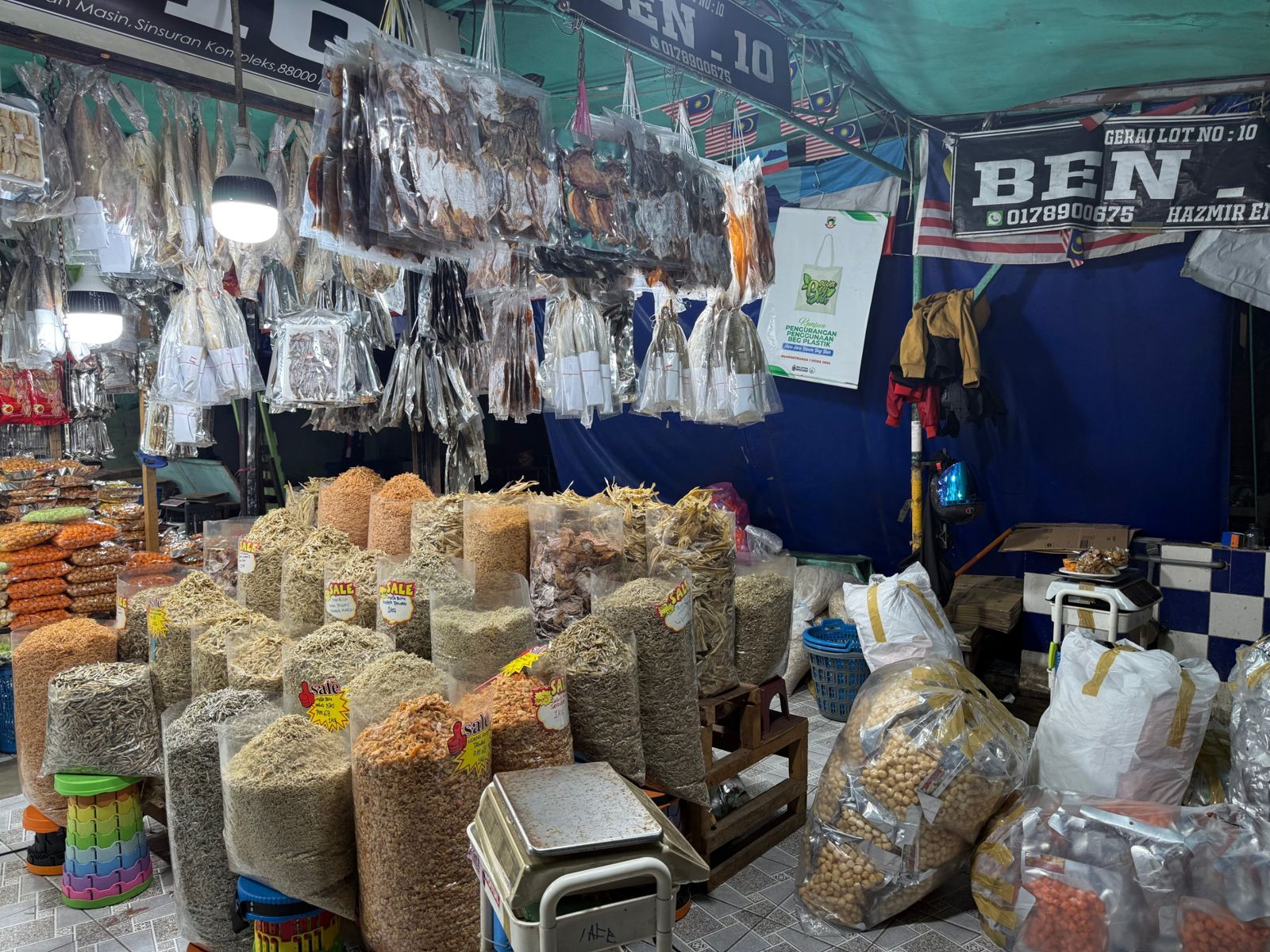
Rows of charcoal grills beside the fish market: whole fish, prawns, squid and chicken wings priced by weight. Next door, the handicraft market sells pearls, sarongs and dried seafood.
City Mosque, Likas Bay
The white-and-blue mosque set on a man-made lagoon. Visitors are welcome outside prayer times; robes are provided at the gate. Closed to tourists on Fridays.
Mari Mari Cultural Village
A forest village 25 minutes from town with houses of five Sabah ethnic groups. Guided sessions include fire-starting, blowpipes, rice wine tasting and a meal. Book a time slot.
Sabah State Museum
Longhouse-style main building with ethnography, natural history and a heritage village of traditional houses in the grounds. The best primer on the state's 30-plus ethnic groups.
Signal Hill and Atkinson Clock Tower
A short climb above Gaya Street to the city's viewpoint and its oldest standing structure, a 1905 wooden clock tower. Check locally whether the observation deck is open.
Kokol Hill
A ridge about 45 minutes inland with cafes and stays facing the sea on one side and Mount Kinabalu on the other. Good for sunset when the beach is clouded over.
Lok Kawi Wildlife Park
Thirty minutes south. The practical way to see orangutans, proboscis monkeys, pygmy elephants and sun bears if your trip does not reach eastern Sabah.
Gaya Street, by day and in the evening
Gaya Street is the oldest street in the city, laid out in the Jesselton years and once called Bond Street. It runs for a few hundred metres through the old town, lined with Chinese coffee shops, bakeries, small hotels and clan offices. It is the one street most visitors return to several times: for breakfast, for the Sunday market, and for the weekend night market.
| When | What happens | How to use it |
|---|---|---|
| Sunday, about 6 am to 1 pm | Gaya Street Sunday Market (Tamu Jalan Gaya, also called the Gaya Street Fair). The whole street closes to traffic and fills with stalls from end to end. | Arrive between 6:30 and 8 am. By 10 am it is hot and crowded, and stalls start packing up from noon. |
| Friday and Saturday, about 6 pm to 11 pm | Api-Api Night Food Market. The street closes again for street food, fruit, drinks, crafts and buskers under strings of lights. | Come hungry at about 7 pm and graze from stall to stall. Rain can thin it out or end it early. |
| Every morning, 6:30 to 11 am | The coffee shops serve the city's best-known breakfasts: laksa, ngiu chap, sang nyuk mee, roti kahwin and buns from the oven. | Weekday mornings are the calmest time to eat here. Popular shops sell out or close by early afternoon. |
| Other evenings | Traffic returns and most coffee shops are shut, but bak kut teh shops, a few restaurants, cafes and bars stay open, and the street is lit and pleasant to walk. | Combine dinner here with a drink on Australia Place or at a rooftop bar nearby. |
| Chinese New Year and festivals | Lanterns go up along the street and lion dances, stage shows and extra night markets are held. | Check the events calendar; shops close for the first days of the new year. |
At the Sunday market
- What is sold: local fruit and vegetables, Tenom coffee, Sabah tea, wild honey, dried seafood, kuih and snacks, batik and sarongs, baskets, beadwork, pearls, souvenirs, plants, antiques and bric-a-brac.
- What to eat: coconut pudding, grilled sausages and satay, fresh sugar-cane and coconut juice, local doughnuts, then a proper breakfast at a coffee shop on the street.
- Prices: bring small ringgit notes. Bargain gently for crafts and souvenirs; food prices are fixed.
- Comfort: the market is not covered. Bring a hat, water and an umbrella.
- Getting there: walk, or set a Grab drop-off on a side street. Parking nearby fills before 8 am.
- Care: keep your phone and wallet in front pockets in the crush, and think twice before buying live animals or coral and shell items.
In the evening
- Night market food: grilled chicken wings, satay, fried kuey teow, rojak, curry fish balls, fruit shakes and local sweets.
- Seating: limited. Most people eat standing or carry food to the small square at Lintasan Deasoka.
- After the market: bars on Australia Place and rooftop bars are five minutes away on foot.
- On other nights: for a night market, go to the waterfront market beside the fish market, which runs nightly.
- Hours vary: the night market has run until 11 pm or later at different times. Ask your hotel if you plan a late visit.
What to see along the street
- Sabah Tourism building, No. 51: a 1916 stone building, formerly the post office and one of the few structures to survive the war. The tourist information centre is inside.
- The Chinese arch at the southern end and the old shophouse signboards.
- The Jesselton Hotel, the city's oldest hotel, opened in the 1950s.
- Former Maybank building on Jalan Pantai, one street over, now a photo stop.
- Australia Place, Atkinson Clock Tower and the Signal Hill steps, all within five minutes on foot.
Neighbourhoods
| Area | What it is like | Go for |
|---|---|---|
| Gaya Street and the old town | The original Jesselton grid: shophouses, coffee shops, the Sunday market and the tourism board in a 1916 stone building. | Breakfast, walking, heritage |
| Waterfront and Sinsuran | Fish market, night market, handicraft stalls, seafood restaurants and bars facing the sunset. | Evenings, seafood, souvenirs |
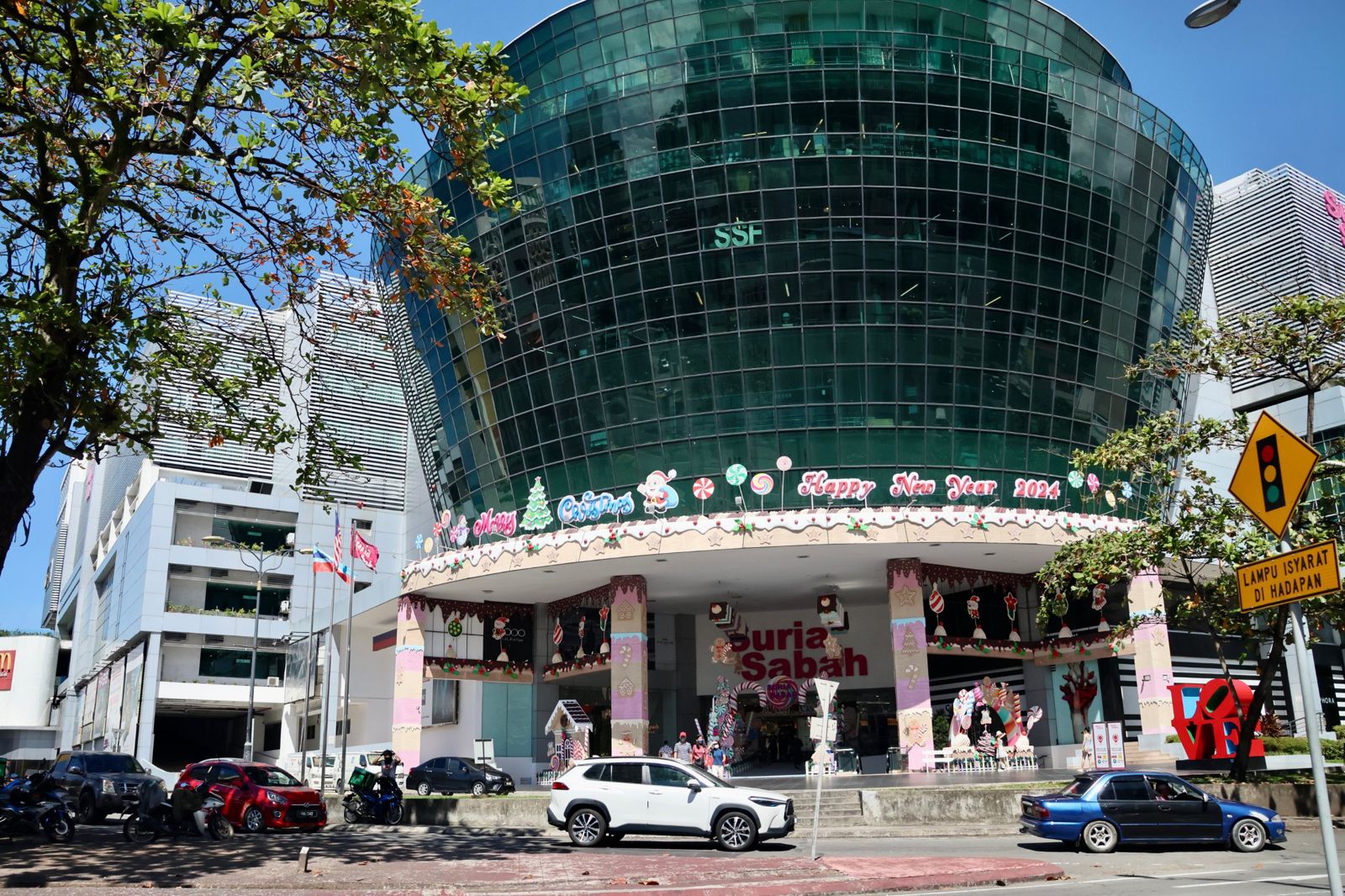
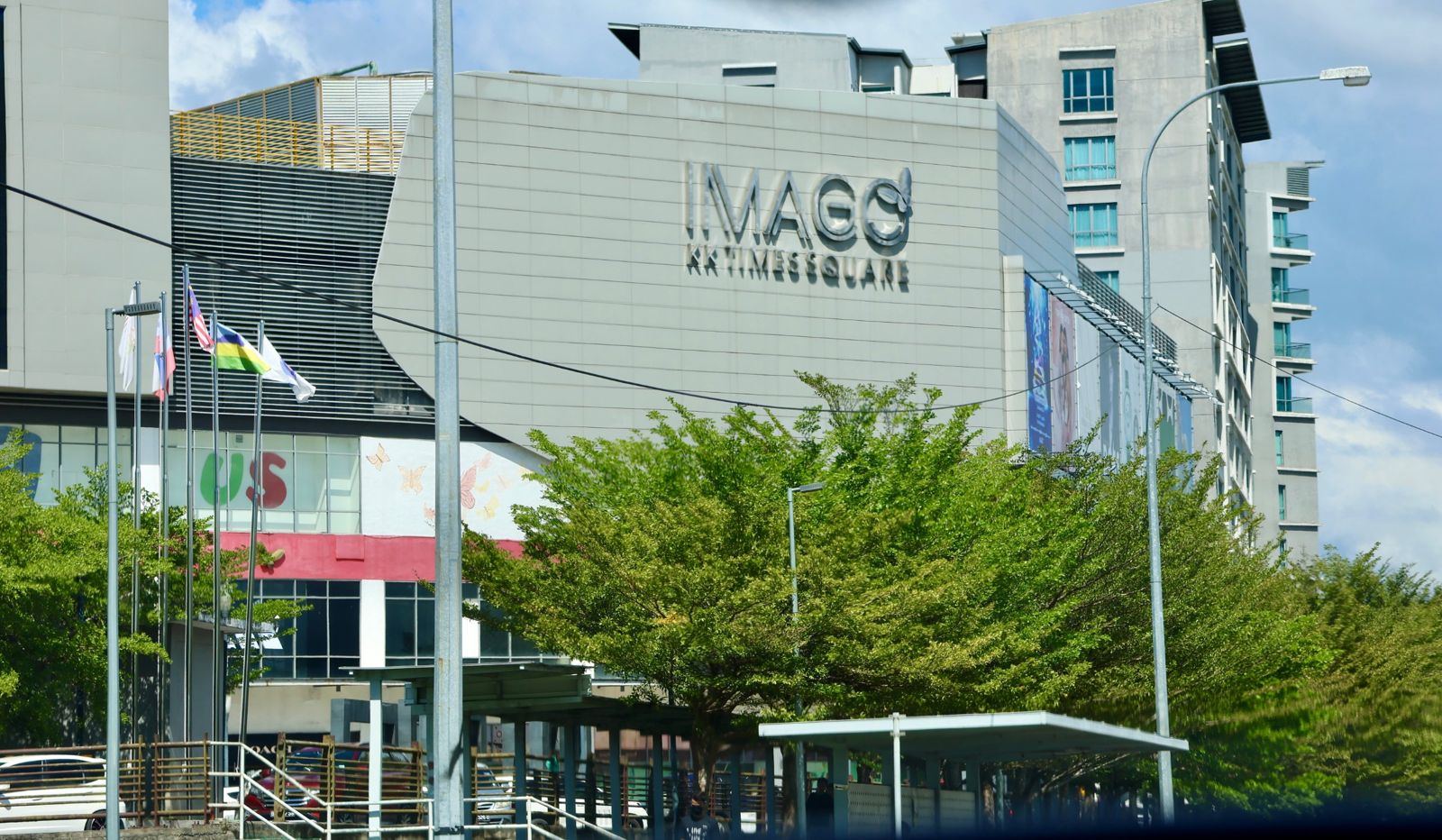
| Api-Api and KK Times Square | Newer blocks with malls, cafes and serviced apartments on reclaimed land. | Shopping, air-conditioning |
| Tanjung Aru | Beach suburb beside the airport with a park, food stalls and resort hotels. | Sunset, jogging, families |
| Likas | Bayside district north of the centre with a long promenade, the City Mosque and sports complex. | Cycling, the mosque, wetlands |
| Luyang and Damai | Residential areas with some of the best local food courts and noodle shops. | Eating where residents eat |
| Penampang | Kadazandusun heartland 15 minutes inland: the Donggongon tamu, the KDCA cultural hall and hillside churches. | Culture, markets, Kaamatan |
More to see
Kota Kinabalu Wetland Centre
A mangrove forest inside the city with a boardwalk of about 1.5 km. Look for mudskippers, fiddler crabs, herons and kingfishers. Go early and bring repellent. Check opening days before you go.
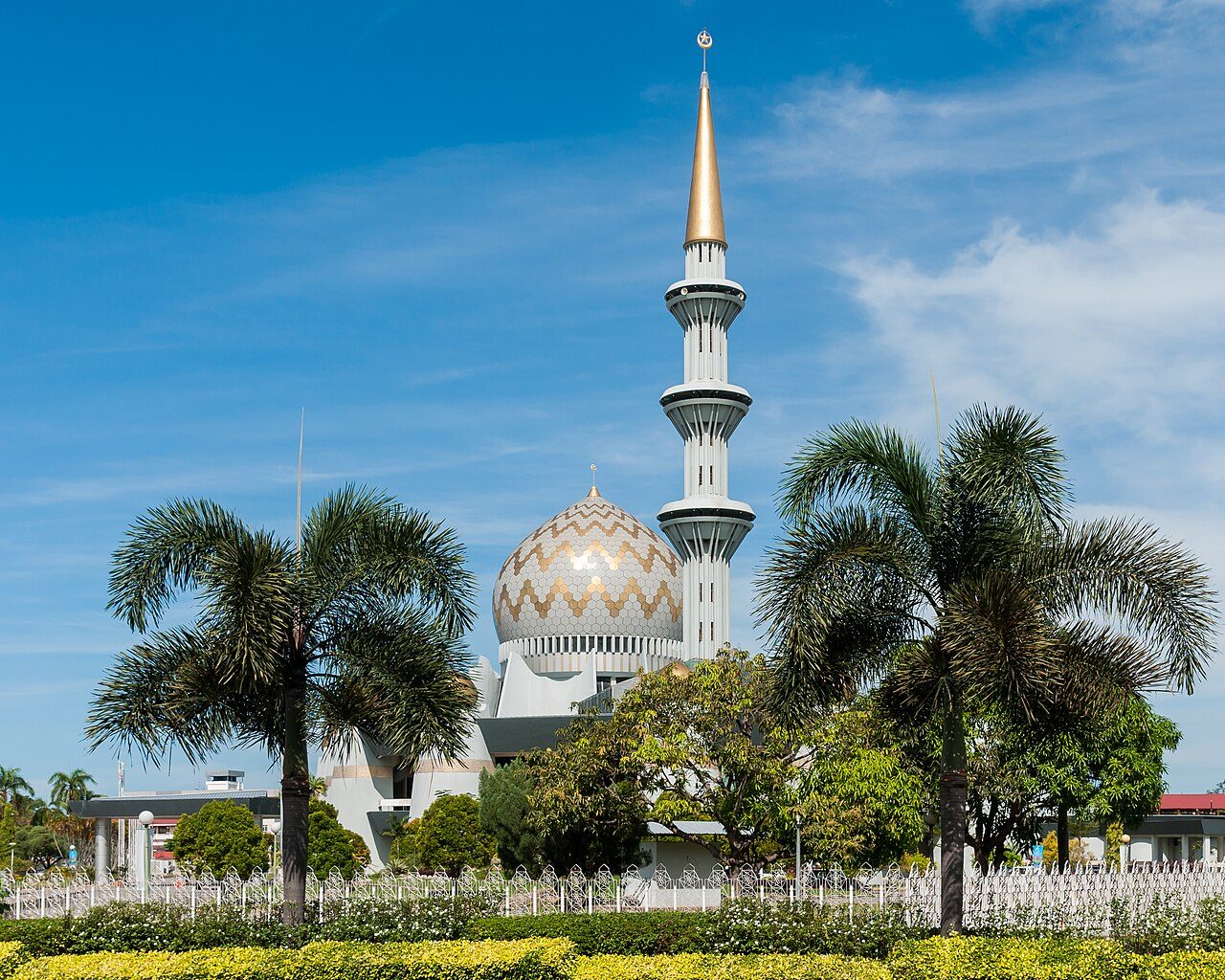
Sabah State Mosque
The state's main mosque in Sembulan, with a large gold-patterned dome. Visit outside prayer times, dress modestly and ask at the entrance for a robe.
Universiti Malaysia Sabah
A hillside campus by the sea. Visitors come for the pink mosque, the aquarium and marine museum, and the view from the clock tower. A small campus entry fee applies.
Sabah Art Gallery
A basket-shaped building near the State Museum showing work by Sabahan artists. Easy to combine with the museum on a rainy day.
Puh Toh Tze Temple
A large Buddhist temple off Jalan Tuaran with a tall Guanyin statue at the entrance. Free to enter; be quiet and respectful.
Memorials
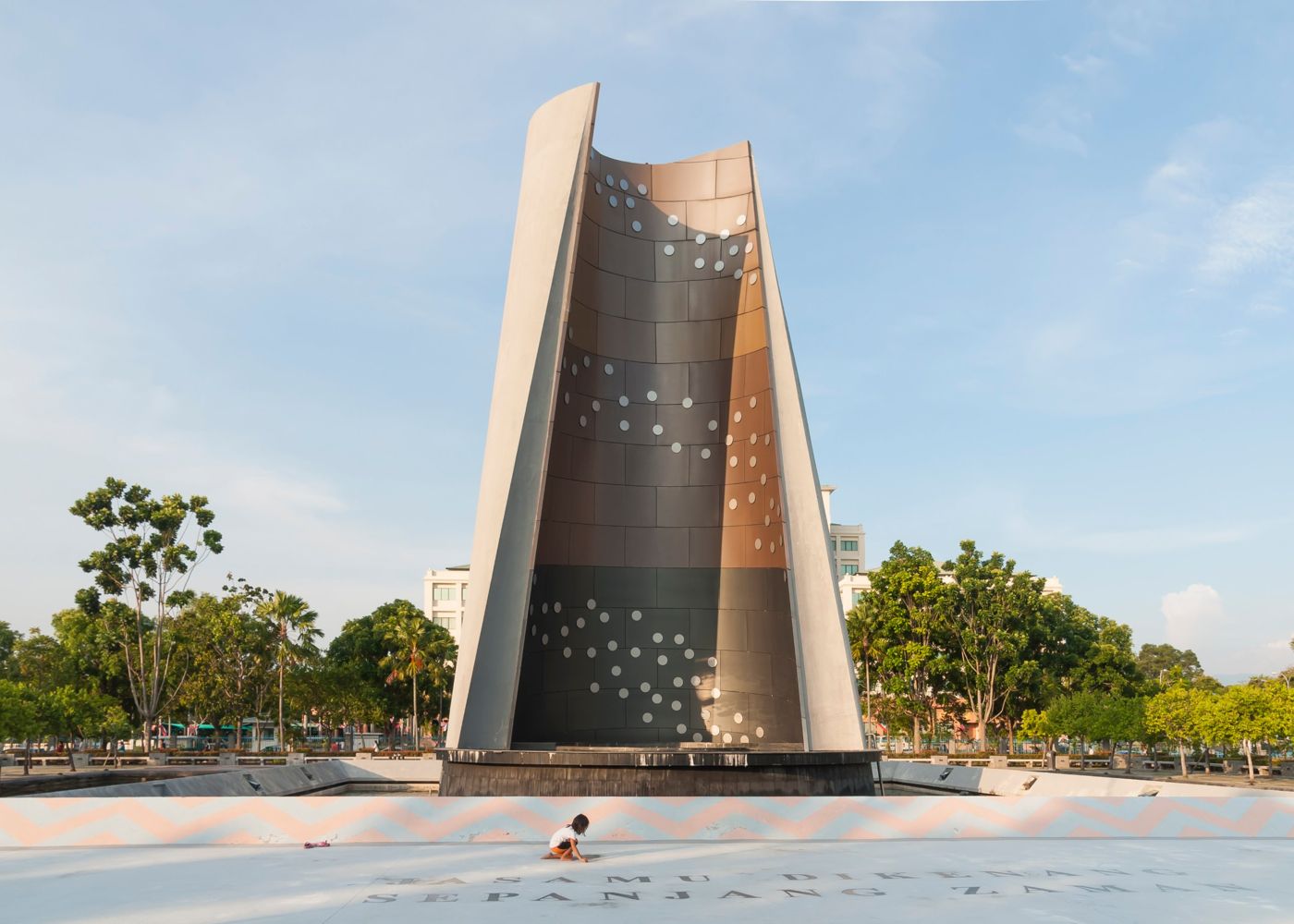
The Petagas War Memorial near the airport honours resistance fighters executed in 1944. The Double Six Monument in Sembulan marks the 1976 air crash that killed the chief minister and members of his cabinet.
Perdana Park
A landscaped park in Tanjung Aru with a jogging track, playground and a lit musical fountain after dark. Popular with local families.
Tun Fuad Stephens Park
Known as Bukit Padang. A lake circuit and a forested hill trail where residents exercise at dawn and dusk. A good free walk close to town.
Heritage walk
Start at the Atkinson Clock Tower, pass Australia Place where Allied troops camped in 1945, continue to the tourism board building and finish with coffee on Gaya Street.
Popular photo spots
| Spot | What to photograph | Best time |
|---|---|---|
| Former Maybank building, Jalan Pantai | The bright yellow signboard on a street corner near Gaya Street that went viral on social media. The branch is closed; stay on the pavement and watch for traffic. | Morning or late afternoon |
| Gaya Street | Shophouse fronts, old signboards, the Chinese arch and the Sunday market crowd. | Sunday, 7 to 9 am |
| City Mosque, Likas Bay | The mosque reflected in its lagoon, from the roadside promenade. | Sunrise or dusk |
| Tanjung Aru Beach | Silhouettes against the sunset and reflections on wet sand at low tide. | 5:45 to 6:45 pm |
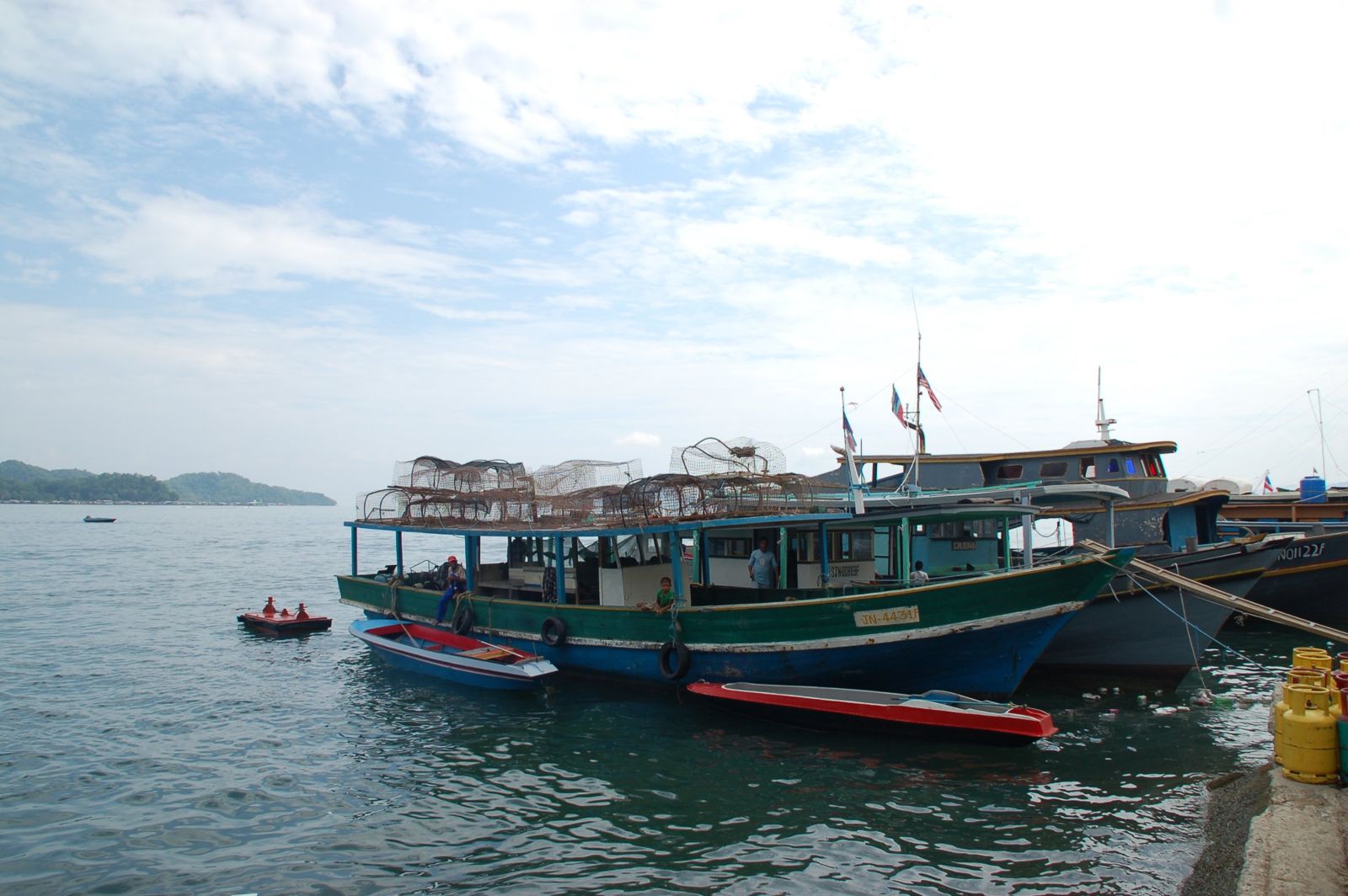
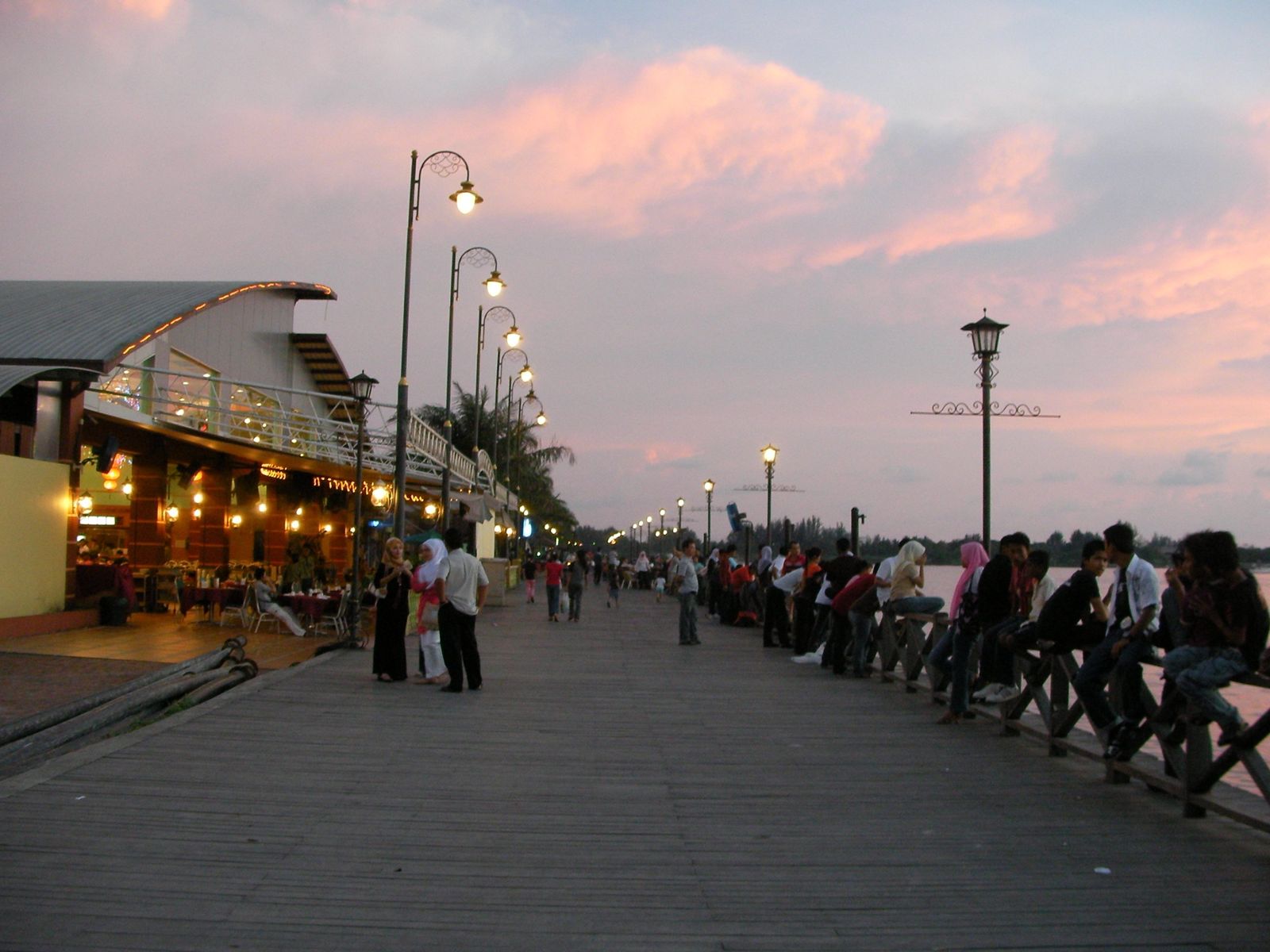
| Waterfront and the marlin statue | The boardwalk, fishing boats and the marlin statue with the I love KK sign. | Late afternoon |
| Signal Hill | The city roofs, the port and the islands from above. | Late afternoon |
| Atkinson Clock Tower | The white wooden tower framed by trees. | Morning |
| University pink mosque | The pink mosque and its lake at Universiti Malaysia Sabah. | Morning |
| Sabah State Mosque | The gold-patterned dome and minaret from the roundabout gardens. | Morning, blue sky |
| Sapi and Manukan jetties | Clear turquoise water and fish beneath the pier. | 9 to 11 am |
| Kokol Hill | Sunset over the sea on one side and Mount Kinabalu on the other. | Sunset or sunrise |
| Desa dairy farm, Kundasang | Cattle on green pasture with the summit behind. | Before 9 am |
Keep shop and bank entrances clear, ask before photographing people, and dress modestly at mosques. Drones need permits near the airport and in state parks.
Elevation0 m
Beaches and sunsets
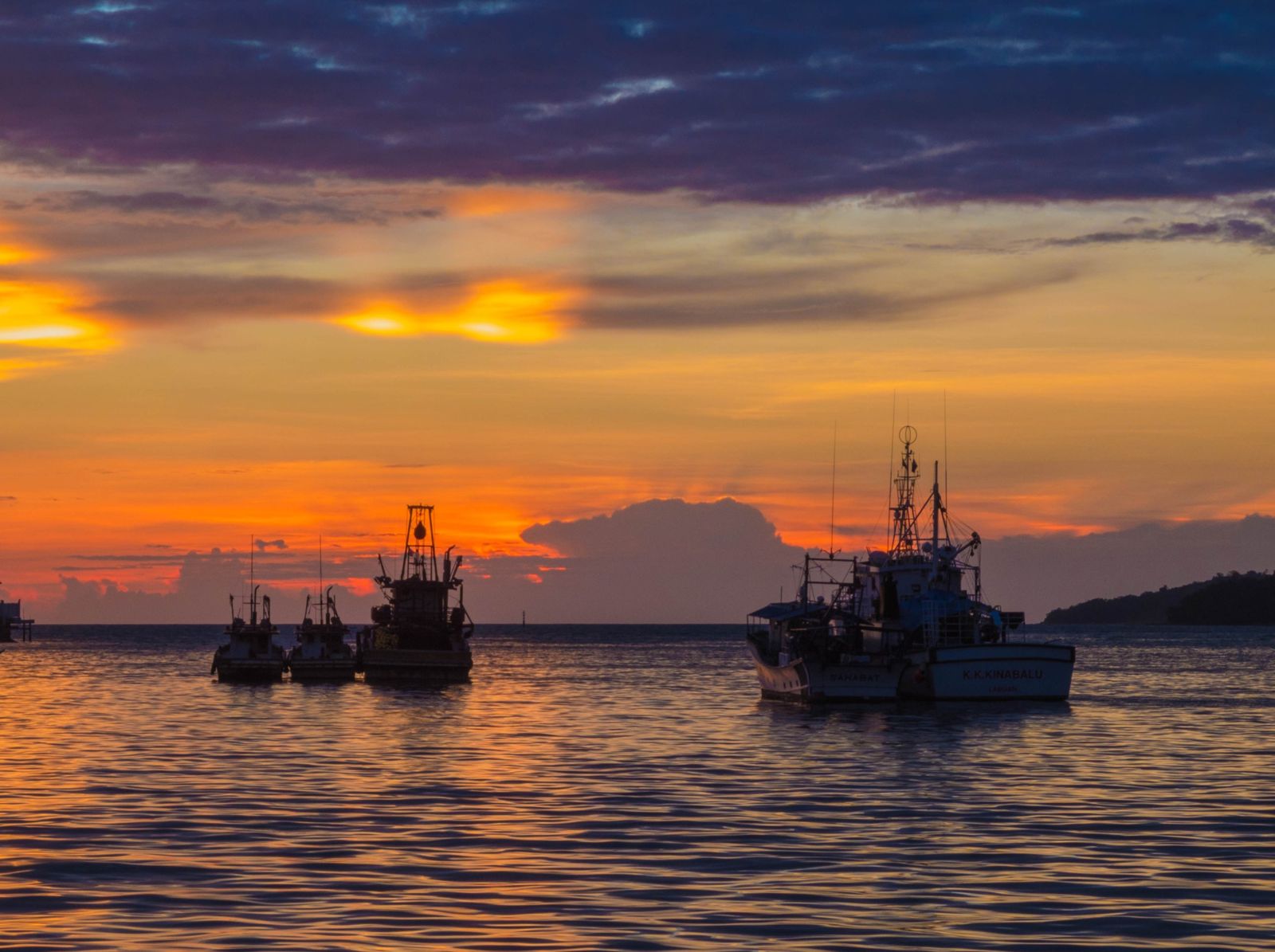
The city faces due west across the South China Sea, so the sun sets over water every evening. Sunset is between about 6:00 and 6:30 pm all year.
Mainland beaches
- Tanjung Aru: the city beach, in three stretches. First Beach has the food stalls and crowds; Third Beach is the quietest. Good for walking and sunset, average for swimming.
- Likas Bay and Tanjung Lipat: a promenade with a cycling path and views back to the city skyline. Not a swimming beach.
- Karambunai and Dalit: long, clean resort beaches 30 to 45 minutes north. Day passes to the resorts are sometimes available.
- Tuaran coast: empty sand backed by casuarina trees. Bring your own shade and water.
- For clear water and coral, the islands are better than any mainland beach.
Where to watch the sunset
- Tanjung Aru Beach: the classic. Arrive 45 minutes early at weekends for parking.
- The waterfront: bars and restaurants on the boardwalk face the islands. Order a drink and stay put.
- A sunset cruise: two-hour boat trips leave from the city marinas with dinner or snacks.
- Signal Hill or Kokol Hill: higher views with the islands in silhouette.
- The university beach: a quieter stretch north of the city.
- The best colour often comes 10 to 15 minutes after the sun has gone.
Elevation0 m
Island hopping
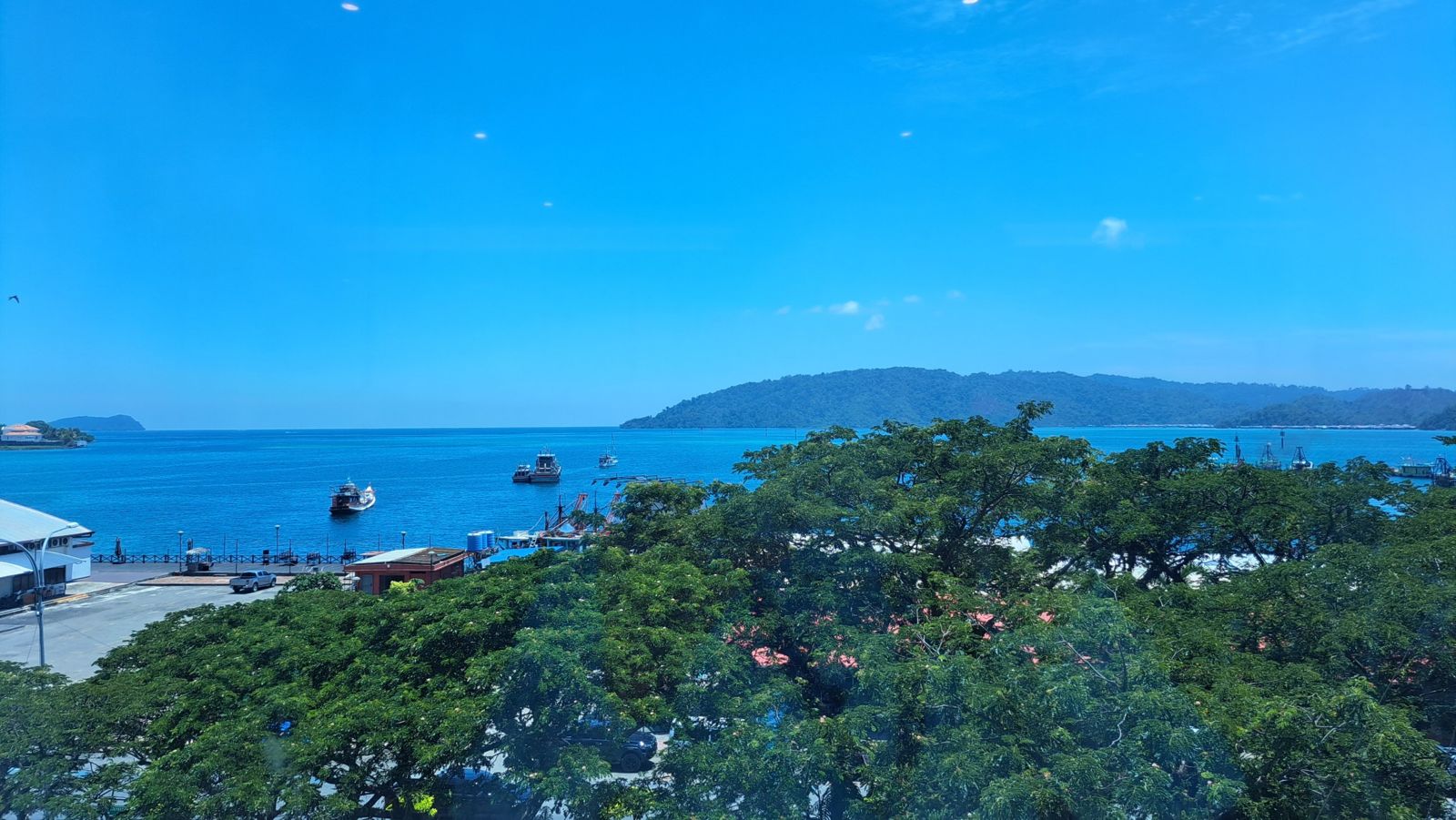
Tunku Abdul Rahman Park is five islands a 15 to 20 minute speedboat ride from the city. You buy a boat ticket for one to four islands, set your own return times and spend the day swimming and snorkelling.
Manukan
The most developed island: long beach, restaurant, showers, chalets and a jogging trail. Busiest between 10 am and 2 pm.
Sapi
Small, with clear water and a pretty beach. A zipline crosses the channel from Gaya. Monitor lizards wander the picnic area.
Mamutik
The smallest island. Coral lies close to shore, so it suits snorkellers and divers. Fewer facilities and fewer people.
Gaya
Forested, with hiking trails and three resorts on private bays. Day-trippers use Padang Point; most visitors come to stay overnight.
What a day costs
| Item | Notes | International adult | Malaysian adult |
|---|---|---|---|
| Return boat | Priced by number of islands, from one to four. | RM35–75 | RM35–75 |
| Terminal fee | Paid with the boat ticket. | about RM7 | about RM7 |
| Conservation fee | Paid once a day to Sabah Parks and valid on every island. Bring ID. Card payment is common. | RM25 | RM8 |
| Snorkel set and life jacket | Rented at the terminal or on the island. | RM15–25 | RM15–25 |
How to do it
- Be at the jetty by 8:30 am. Boats run from about 8 am, and the last return is around 4 pm.
- Two islands is the comfortable number. Three or four becomes a boat schedule.
- Agree return times when you buy the ticket and keep the receipt for ranger checks.
- Bring water, a towel, a dry bag, reef-safe sunscreen and cash for lunch.
On the water
- Parasailing, banana boats and jet skis are sold at the terminal. Compare booths and agree prices first.
- Sea-walking and try-dives run off Sapi and Gaya.
- Certified divers can book two-tank day trips in the park from city dive shops.
- Do not touch coral or feed fish. Swim inside the marked areas.
Islands further out
- Mantanani: clear water and sandbars off Kota Belud. A full-day tour: about 90 minutes by road and an hour by boat.
- Pulau Tiga: mud volcano and quiet beaches, from Kuala Penyu two hours south.
- Dinawan and Sepanggar: private-island day trips with lunch included, less crowded than the park.
Which island?
| Island | Beach | Snorkelling | Facilities | Crowds | Best for |
|---|---|---|---|---|---|
| Manukan | Long and wide | Fair, plenty of fish | Restaurant, showers, chalets, lifeguards | Busy | Families, first visits |
| Sapi | Small and pretty | Good at the edges | Cafe, showers, barbecue pits | Busy by late morning | Swimming, zipline |
| Mamutik | Short | Good, coral near shore | Basic stalls and toilets | Moderate | Snorkellers, divers |
| Gaya | Several small bays | Good on the resort reefs | Resorts; little for day visitors | Quiet | Hiking, overnight stays |
| Sulug | Sandbar | Good | None | Empty | Private charters only |
Diving
- Dive shops in the city run daily two- and three-tank trips in the park, a 20-minute boat ride away.
- Expect coral gardens, reef fish, nudibranchs, turtles and seasonal sightings of larger animals.
- Visibility is usually 5 to 15 metres and best in the dry months.
- Open-water courses and one-day try-dives are widely offered.
Staying overnight
- Gaya has three resorts on separate bays, each with its own boat from the city.
- Manukan has chalets run by a resort operator.
- Camping is allowed on some islands with a Sabah Parks permit.
- The islands are at their best before 9 am and after 3 pm, when day visitors are gone.
Avoiding problems
- Buy tickets at the counters inside the terminal, not from people who approach you outside.
- Confirm what the price includes: boat, terminal fee, gear and life jacket.
- Boats stop in bad weather. Go on the first clear morning of your trip.
- Keep food sealed. Macaques and monitor lizards take unattended bags.